⏱ 8 min read
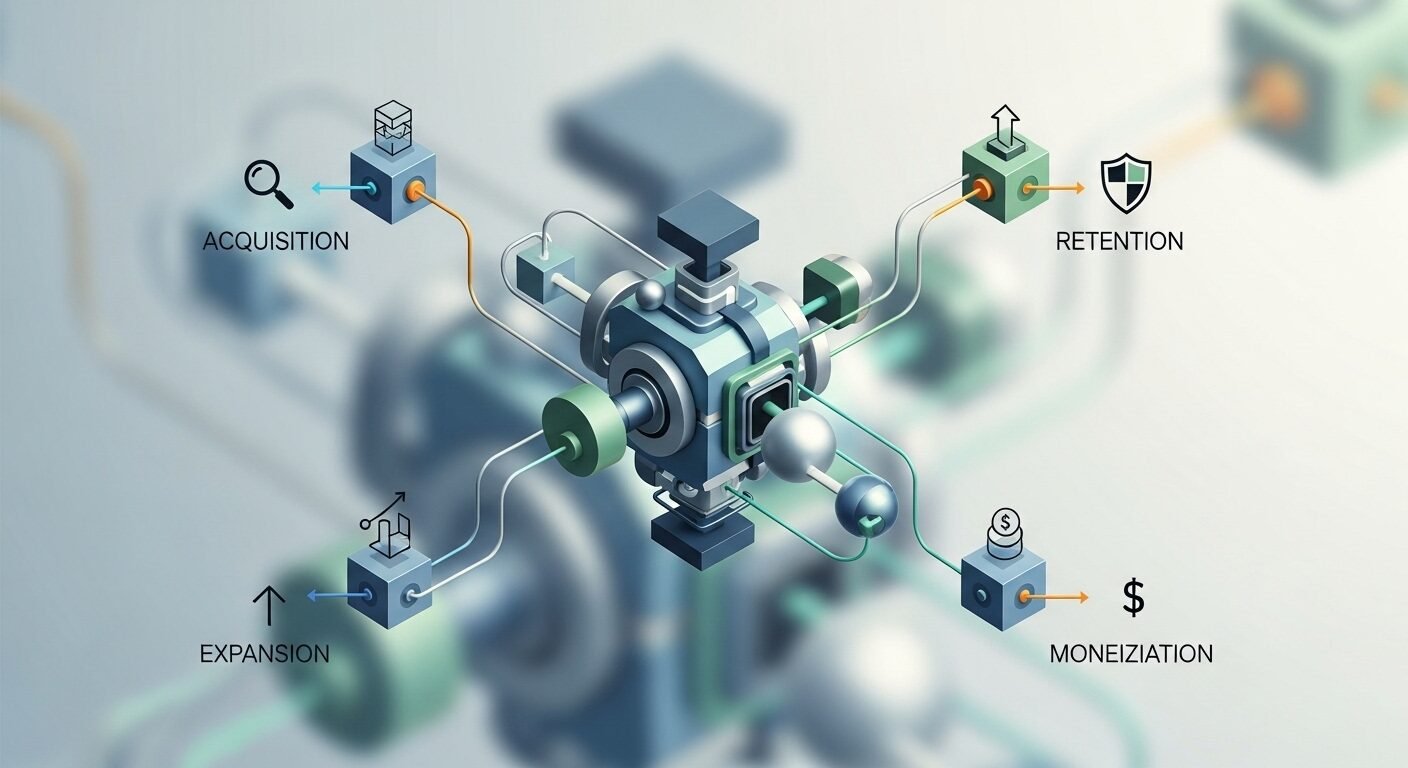
Building a sustainable, high-velocity SaaS growth engine in 2024 requires moving beyond isolated tactics to a cohesive, data-driven framework. This systematic approach integrates product-led growth, efficient customer acquisition, and robust retention mechanics to create a compounding flywheel. Experts recommend focusing on predictable scalability, where each investment in growth fuels the next cycle of expansion. The goal is to construct a machine that systematically converts market opportunities into recurring revenue and long-term customer value.
Key Takeaways
- A modern SaaS growth engine is a systematic framework, not a collection of random tactics.
- Product-Led Growth (PLG) is now foundational, requiring a seamless user onboarding experience.
- Scalability depends on predictable Customer Acquisition Cost (CAC) and high Lifetime Value (LTV).
- Retention and expansion revenue are critical pillars for sustainable growth.
- Continuous experimentation and data analysis are required to optimize the engine.
- Alignment between marketing, sales, product, and customer success teams is non-negotiable.
What Is a SaaS Growth Engine Framework?
A SaaS growth engine framework is a structured, repeatable system designed to acquire, activate, retain, and expand customers predictably. It moves beyond one-off campaigns to create interconnected loops where product usage, marketing, and customer success work in unison. This framework prioritizes scalability, efficiency, and sustainable revenue expansion over time.
A systematic framework provides the blueprint for scaling. It connects your value proposition directly to customer acquisition channels and retention strategies. According to industry data, companies with a documented growth model scale 30% faster than those relying on ad-hoc efforts.
The framework ensures all teams work toward common goals. Marketing generates qualified leads, sales converts them, the product team delivers value, and customer success ensures renewal and expansion. This alignment is the bedrock of efficient scaling for any software-as-a-service business.
Why Is a Systematic Framework Essential in 2024?
A systematic framework is essential because it provides predictability in a volatile market. Rising customer acquisition costs and increased competition make haphazard growth unsustainable. A defined engine allows for precise measurement and iterative improvement of every growth lever.
The standard approach is to build a model that can withstand economic shifts. Experts in the field recommend focusing on efficient growth rather than growth at any cost. This means optimizing for profitable customer relationships from the first touchpoint.
Market conditions demand resilience. A well-architected growth engine helps SaaS companies navigate funding changes, channel saturation, and evolving customer expectations. It turns growth from a hope into a forecast.
Core Components of a Scalable Growth Engine
The core components are a targeted acquisition funnel, a frictionless activation process, and a retention-expansion loop. These elements work together to create a compounding effect. Research shows that companies mastering all three components achieve significantly higher valuations.
Acquisition must be both broad and deep. This involves identifying ideal customer profiles and selecting channels that deliver them cost-effectively. Content marketing, partnerships, and product-led signups are common pillars.
Activation is about delivering immediate value. The user’s first experience must demonstrate core product benefits quickly. Retention relies on ongoing value delivery, proactive support, and community building. Expansion is driven by upselling, cross-selling, and advocacy programs.
How to Build Your Growth Engine: A Step-by-Step Process
- Define Your Ideal Customer Profile (ICP) and Value Proposition. Start by deeply understanding who you serve and the unique problem you solve. Document their pain points, demographics, and buying behavior. This clarity informs every subsequent step in your scalable SaaS growth model.
- Map the Customer Journey and Identify Key Touchpoints. Chart the path from awareness to advocacy. Identify where prospects discover you, how they evaluate your solution, and what drives their decision to buy and stay. This map reveals optimization opportunities.
- Select and Prioritize Acquisition Channels. Choose channels where your ICP is active and you can compete effectively. Common channels include SEO, content marketing, paid advertising, webinars, and referral programs. Focus on 2-3 channels initially to master them.
- Optimize for Product-Led Growth and Activation. Design a seamless onboarding flow that gets users to their first “aha moment” quickly. Remove friction, provide clear guidance, and use data to identify and fix drop-off points in the user experience.
- Implement Retention and Expansion Systems. Build processes for customer education, success check-ins, and proactive support. Develop a clear path for customers to upgrade or purchase add-ons based on their usage and success with your product.
- Establish a Culture of Experimentation and Measurement. Create a testing calendar for hypotheses across acquisition, activation, and retention. Rigorously measure results against key performance indicators and double down on what works.
This process is iterative. You will refine each step based on data and feedback. The team at SaaS Growth Online emphasizes that consistency in execution is more important than perfection in planning.
Key Metrics to Track and Optimize
The north star metric is the ratio of Customer Lifetime Value to Customer Acquisition Cost (LTV:CAC). A healthy SaaS business typically maintains an LTV:CAC ratio of 3:1 or higher. This metric encapsulates the efficiency and sustainability of your entire growth engine.
Other critical metrics include Monthly Recurring Revenue (MRR) growth rate, churn rate, and expansion MRR. Activation rate measures how many users experience core value. Net Promoter Score (NPS) gauges customer satisfaction and predicts retention.
Track funnel conversion rates at each stage. Monitor channel-specific CAC to allocate budget effectively. Analyze usage data to identify features that correlate with long-term retention. These metrics provide the dashboard for your growth engine.
| Metric | Definition | Healthy Benchmark (Early-Mid Stage) | Primary Driver |
|---|---|---|---|
| LTV:CAC Ratio | Lifetime Value divided by Customer Acquisition Cost | 3:1 or higher | Overall engine efficiency |
| Gross MRR Churn | Percentage of monthly revenue lost from cancellations | < 2% | Product value & customer success |
| CAC Payback Period | Months to recover customer acquisition cost | < 12 months | Pricing & sales efficiency |
| Activation Rate | Users who hit key “aha moment” in onboarding | > 30% | Onboarding & UX design |
| Expansion MRR Rate | Growth from existing customers (upsells/cross-sells) | > 20% of New MRR | Account management & product roadmap |
Common Pitfalls and How to Avoid Them
The most common pitfall is prioritizing acquisition over retention. Acquiring customers you cannot keep is a costly mistake. A balanced growth engine invests significantly in keeping and growing existing accounts. Retention fuels sustainable expansion.
Another mistake is copying another company’s framework without adaptation. Your ideal customer profile, product, and market position are unique. Use established principles, but tailor the engine to your specific context and resources.
Failing to establish a single source of truth for data causes misalignment. Ensure all teams use the same metrics and definitions. Avoid vanity metrics that look good but don’t correlate with business health. Focus on actionable data.
What is the first step in building a SaaS growth engine?
The first step is defining your Ideal Customer Profile (ICP) with extreme clarity. You must know exactly who you are serving, what problems they need to solve, and where they seek solutions. This foundational step informs your messaging, channel selection, and product roadmap, ensuring all growth efforts are targeted and efficient.
How much should I budget for customer acquisition?
1. Your budget should be guided by your target LTV:CAC ratio and payback period. A common rule is to spend no more than one-third of a customer’s first-year value to acquire them. 2. Initial budgets are often based on a percentage of projected revenue, typically 20-40%, but this varies by growth stage and funding.
What is the role of product-led growth in this framework?
Product-Led Growth (PLG) is a central component, where the product itself is the primary driver of acquisition, conversion, and expansion. It involves creating a frictionless user experience that demonstrates value quickly, often through freemium models or free trials. PLG reduces reliance on expensive sales teams for initial conversion and leverages user satisfaction for organic growth.
How long does it take to see results from a new growth engine?
You should see initial data and learnings from experiments within the first 1-2 quarters. However, building a truly optimized and predictable engine often takes 12-18 months of consistent iteration. The key is to track leading indicators like activation rate and qualified pipeline velocity alongside lagging indicators like revenue.
Can a small SaaS team implement this framework?
Absolutely. A small team should focus on mastering one acquisition channel, nailing the activation experience, and building strong customer relationships before scaling. The framework is about systematic thinking, not massive spending. Start simple, document your processes, and scale them as you grow.
Building a scalable SaaS growth engine is a strategic imperative for 2024. It transforms growth from a series of guesses into a predictable, manageable process. By focusing on a framework that connects acquisition, activation, retention, and expansion, you create a durable competitive advantage.
The market rewards efficiency and predictability. Companies that master their growth engine can scale sustainably, adapt to changes, and build lasting customer relationships. The journey requires discipline, data, and a commitment to continuous learning.
Ready to architect your company’s future? Begin by auditing your current
8 thoughts on “How to Build a Scalable SaaS Growth Engine in 2024”