⏱ 8 min read
A SaaS growth funnel is a strategic model that maps the customer journey from first discovering a software solution to becoming a loyal, expanding user. It provides a framework for SaaS companies to attract, convert, retain, and grow their customer base systematically. Understanding each distinct stage allows marketing and sales teams to align their efforts, optimize resources, and drive predictable, sustainable revenue growth. This guide breaks down the core stages and actionable strategies for each phase of the funnel.
Key Takeaways
- The SaaS funnel is a multi-stage model for guiding user progression.
- Each stage requires tailored marketing and product strategies.
- Metrics and KPIs must be tracked differently at each phase.
- Retention and expansion are critical for long-term SaaS profitability.
- A cohesive strategy across all funnel stages drives sustainable growth.
- Alignment between marketing, sales, and customer success is essential.
What Are the Core Stages of the SaaS Funnel?
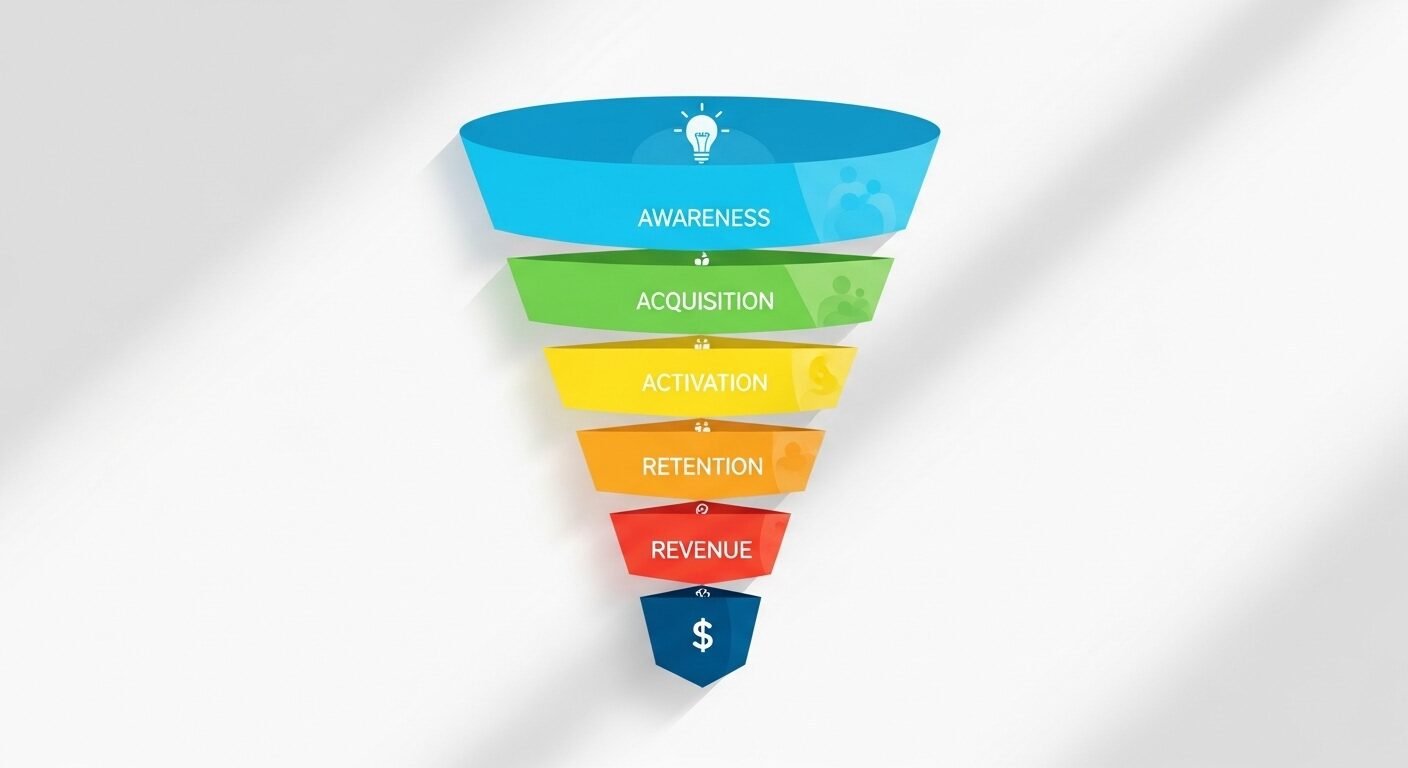
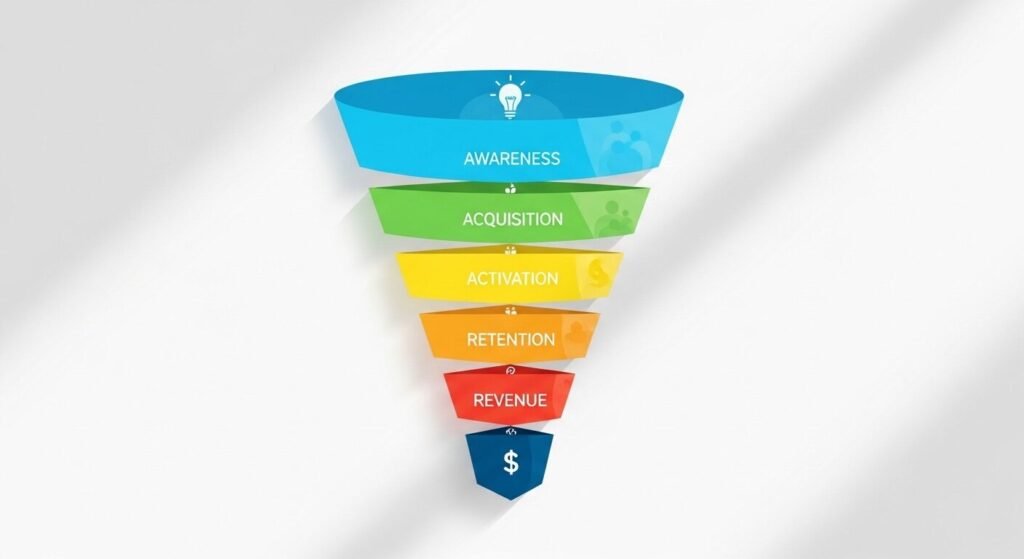
The SaaS growth funnel is a marketing and sales model outlining the journey a potential customer takes from first learning about a software product to becoming a paying, retained, and expanded user. It typically consists of five key stages: Awareness, Consideration, Conversion, Retention, and Expansion. This framework helps SaaS companies systematically attract, nurture, and grow their customer base.
The standard approach is to visualize the funnel as a multi-tiered process. It begins wide at the top to capture broad awareness and narrows as prospects move toward becoming customers. The model emphasizes that not all leads will convert, and the goal is to efficiently guide them downward. Each stage represents a distinct shift in the user’s mindset and relationship with the brand. Experts in the field recommend mapping specific goals, content, and metrics to each phase for clarity and effectiveness.
Traditional sales funnels often end with a purchase. The SaaS customer journey model extends beyond the initial sale. It includes post-purchase stages crucial for subscription-based business health. This reflects the ongoing nature of the Software-as-a-Service relationship. According to industry data, focusing on the entire lifecycle is key for reducing churn and increasing customer lifetime value.
How Does the Awareness Stage Work for SaaS?
The Awareness stage is where potential users first discover your software exists and that it might solve a problem they have. The primary goal here is to generate top-of-funnel interest and attract qualified traffic. Companies use content marketing, search engine optimization, social media, and paid advertising to reach their target audience.
Effective content at this stage is educational and problem-focused, not product-centric. Blog posts, industry reports, and foundational guides are common formats. The aim is to establish thought leadership and brand recognition. Success is measured by metrics like website traffic, social reach, and brand search volume. It is vital to target the right audience demographics and pain points from the outset.
Marketing teams must identify where their ideal customers seek information. Common channels include LinkedIn for B2B SaaS, specific online communities, and industry publications. Creating valuable, shareable content builds initial trust. This lays the groundwork for moving engaged visitors into the next phase of the marketing funnel.
What Happens During the Consideration Phase?
During the Consideration phase, prospects actively evaluate different solutions to their identified problem, including your SaaS product and competitors. They are comparing features, pricing, and perceived value. Your goal is to demonstrate your product’s superiority and fit for their specific needs.
Marketing assets become more product-focused but still educational. Case studies, detailed feature comparisons, webinars, and free trials are highly effective. Sales teams often begin targeted outreach to nurture these marketing qualified leads. Clear communication of your unique value proposition is the most important task here. Prospects need to understand why your solution is the best choice.
Lead scoring helps prioritize prospects showing strong buying signals. Nurture email sequences can address common objections and highlight key benefits. Providing transparent pricing and clear differentiation speeds up the decision-making process. The consideration stage is where trust is solidified before asking for a financial commitment.
How to Optimize the Conversion and Activation Stage
Conversion is the point where a prospect becomes a paying customer, typically by subscribing to a plan. Activation is the immediate post-signup process where the user first experiences the core value of your product. A smooth, frictionless conversion and a quick “aha moment” are critical for reducing early churn.
The sign-up process should be simple, with minimal required fields. Offering multiple payment options and clear plan tiers reduces abandonment. Once signed up, a structured onboarding flow guides the user to their first success. A well-designed onboarding sequence is the single biggest factor in early user retention. Research shows that users who achieve initial value quickly are far more likely to stay.
Steps to Optimize User Activation
- Define the “Aha Moment”: Identify the specific action or outcome that delivers core value. This could be completing a profile, importing first data, or creating a first project.
- Design a Guided Onboarding Flow: Create a step-by-step, in-app tutorial or checklist that leads new users directly to that aha moment, minimizing confusion.
- Provide Contextual Help: Use tooltips, welcome modals, and accessible documentation to answer questions as they arise during the first use.
- Set Up Success Metrics: Track activation rate—the percentage of new sign-ups who reach the aha moment within a set time frame, such as 7 days.
- Iterate Based on Data: Use analytics to see where users drop off in the onboarding process and continuously test improvements to the flow.
Personalized welcome emails and proactive customer support can enhance this experience. The goal is to transition the user from a curious evaluator to an engaged, successful user as efficiently as possible. This sets the foundation for the long-term retention stage.
Why Are Retention and Expansion So Critical?
Retention involves keeping existing customers active and subscribed, while expansion involves growing revenue from those customers through upsells, cross-sells, or increased usage. For SaaS businesses, these stages are where the majority of lifetime value is generated and where profitability is secured.
High customer churn can destroy growth. Retaining a customer is almost always more cost-effective than acquiring a new one. Strategies include ongoing product education, excellent customer support, regular communication, and consistently delivering value. Net Revenue Retention is a key metric that combines retention and expansion. A rate over 100% indicates you are growing revenue from your existing base faster than you are losing it.
Expansion can occur through account upgrades, add-on purchases, or seat increases. Successful expansion relies on deeply understanding customer use cases and identifying unmet needs. Proactive customer success management is essential. According to industry data, expansion revenue from existing customers often outpaces new customer revenue for mature SaaS companies.
| Funnel Stage | Primary Goal | Key Metrics to Track |
|---|---|---|
| Awareness | Generate interest & attract traffic | Website Visitors, Impressions, Brand Search Volume |
| Consideration | Nurture leads & demonstrate value | Lead Conversion Rate, MQLs, Content Engagement |
| Conversion/Activation | Convert to paying, active users | Sign-up Rate, Activation Rate, Trial-to-Paid % |
| Retention | Keep customers subscribed & happy | Churn Rate, Customer Lifetime Value, Engagement Scores |
| Expansion | Grow revenue from existing customers | Net Revenue Retention, Expansion MRR, Upsell Rate |
How to Build a Cohesive Funnel Strategy
Building a cohesive strategy requires aligning marketing, sales, product, and customer success teams around the entire funnel. Each department must understand its role in moving users from one stage to the next. Data sharing and unified goals are fundamental to this alignment.
The strategy should be documented, with clear ownership for each stage. Regular funnel reviews identify bottlenecks, such as a high drop-off between consideration and conversion. Continuous optimization is based on these insights. A unified customer data platform is invaluable for tracking the journey across stages. It provides a single source of truth for user behavior and health scores.
Content and messaging must be consistent yet appropriately tailored for each phase. A prospect in the awareness stage needs different information than a customer in the expansion stage. The team at SaaS Growth Online emphasizes the importance of viewing the funnel as a continuous loop, where expansion leads can become advocates who feed new awareness. This creates a sustainable growth engine.
Frequently Asked Questions
What is the difference between a SaaS funnel and a traditional sales funnel?
A traditional sales funnel often ends with a one-time purchase. The SaaS growth funnel includes post-purchase stages like retention and expansion, which are critical for recurring revenue models. It focuses on the entire customer lifecycle, not just acquisition.
How long does it typically take to move through the SaaS funnel stages?
Sales cycles vary widely. 45% of B2B SaaS sales take over 7 months from first contact to close for complex products. Simpler tools may see conversion in days or weeks. The consideration stage is often the longest phase.
Which SaaS funnel stage is the most important?
All stages are interconnected, but retention is fundamentally critical. High churn negates the value of efficient acquisition. A retained customer provides stable revenue and expansion opportunities, making the business model viable.
What is a good Net Revenue Retention rate for SaaS?
According to industry benchmarks, a good Net Revenue Retention rate for public SaaS companies often exceeds 110%. Rates above 100% indicate that expansion revenue from existing customers outweighs any lost revenue from churn or downgrades.
How do you measure success at the top of the funnel?
Success at the top is measured by the volume and quality of awareness. Key metrics include website traffic from target audiences, marketing qualified lead generation, and cost per lead. The goal is efficient
1 thought on “Understanding the SaaS Growth Funnel: From Awareness to Expansion”